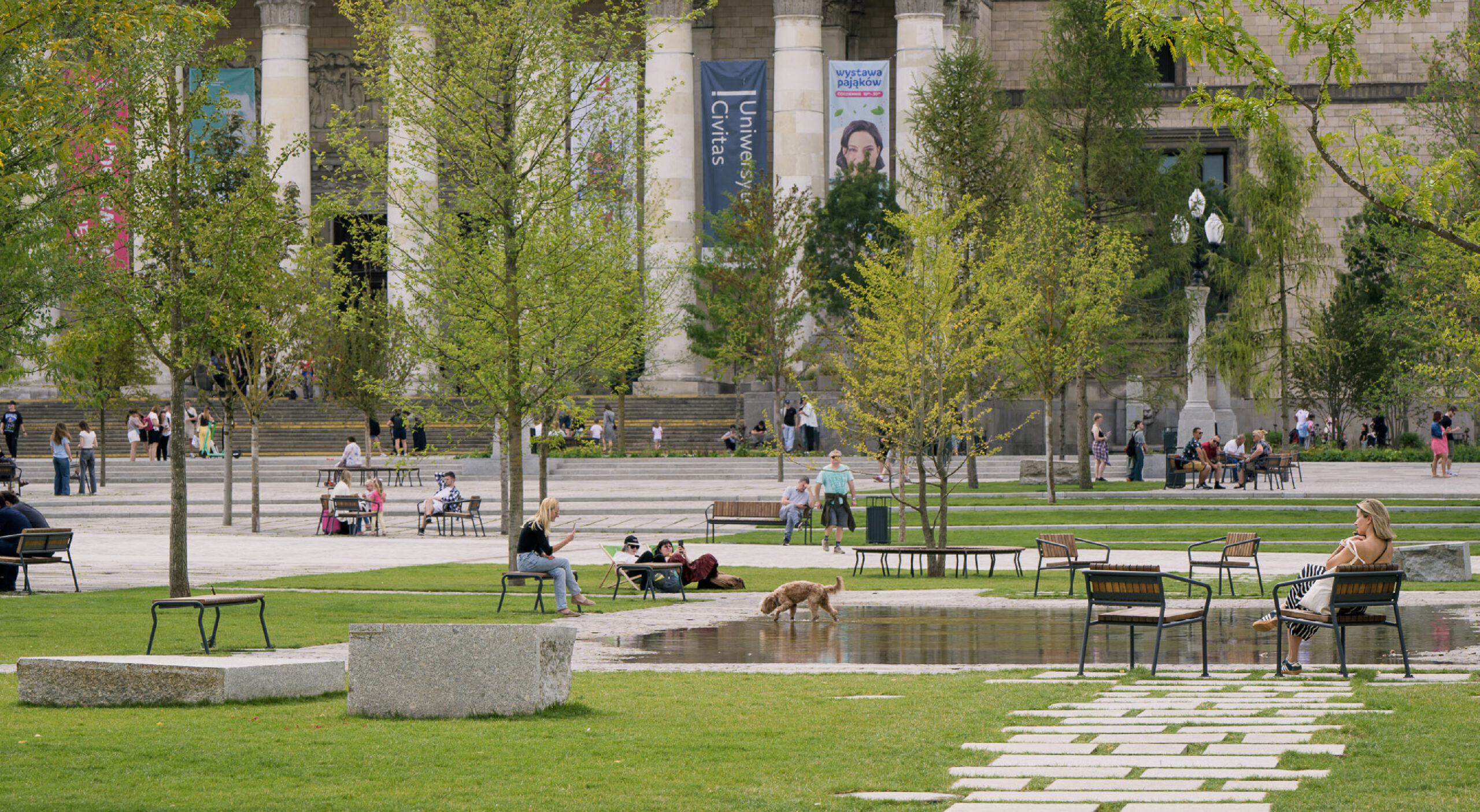
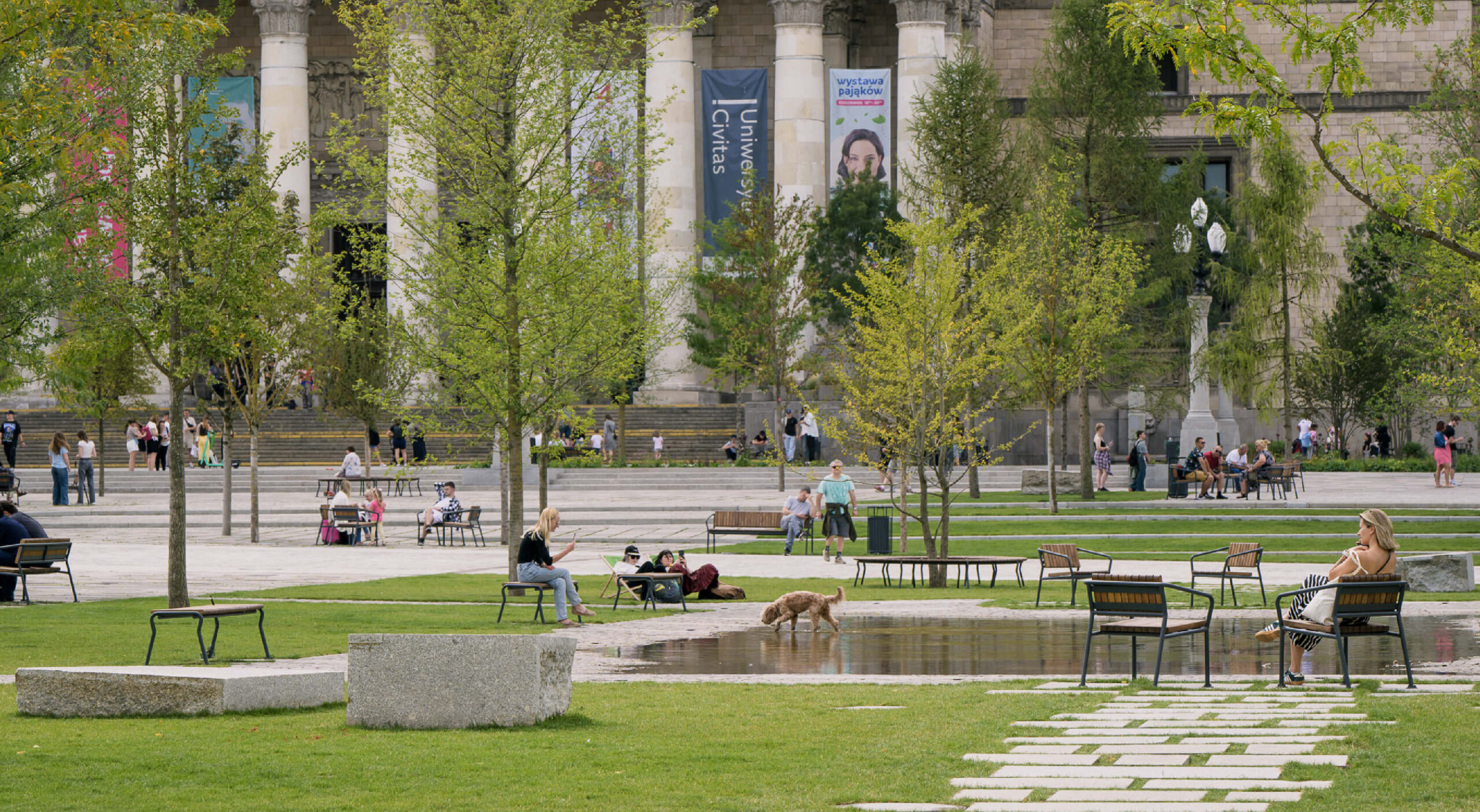
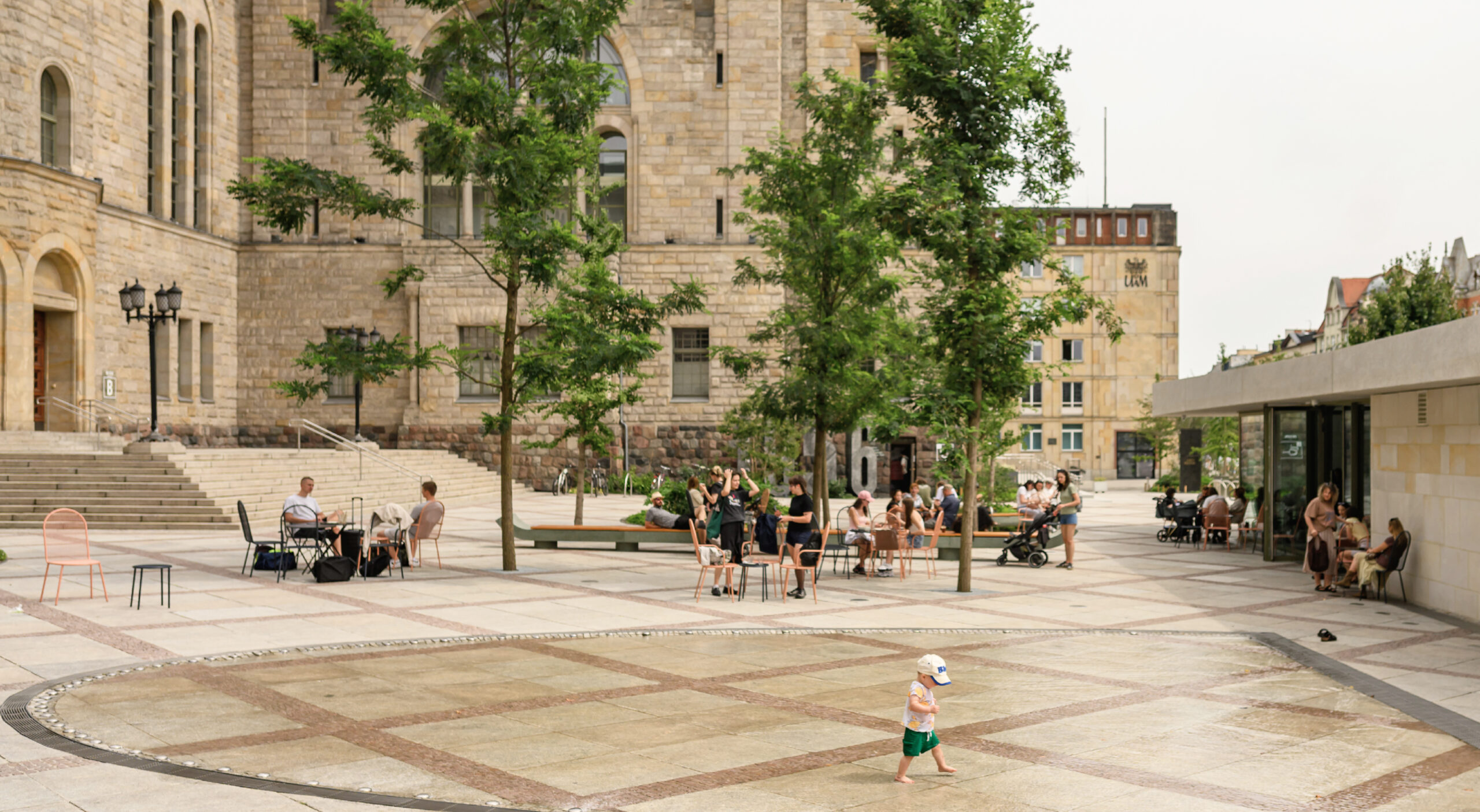
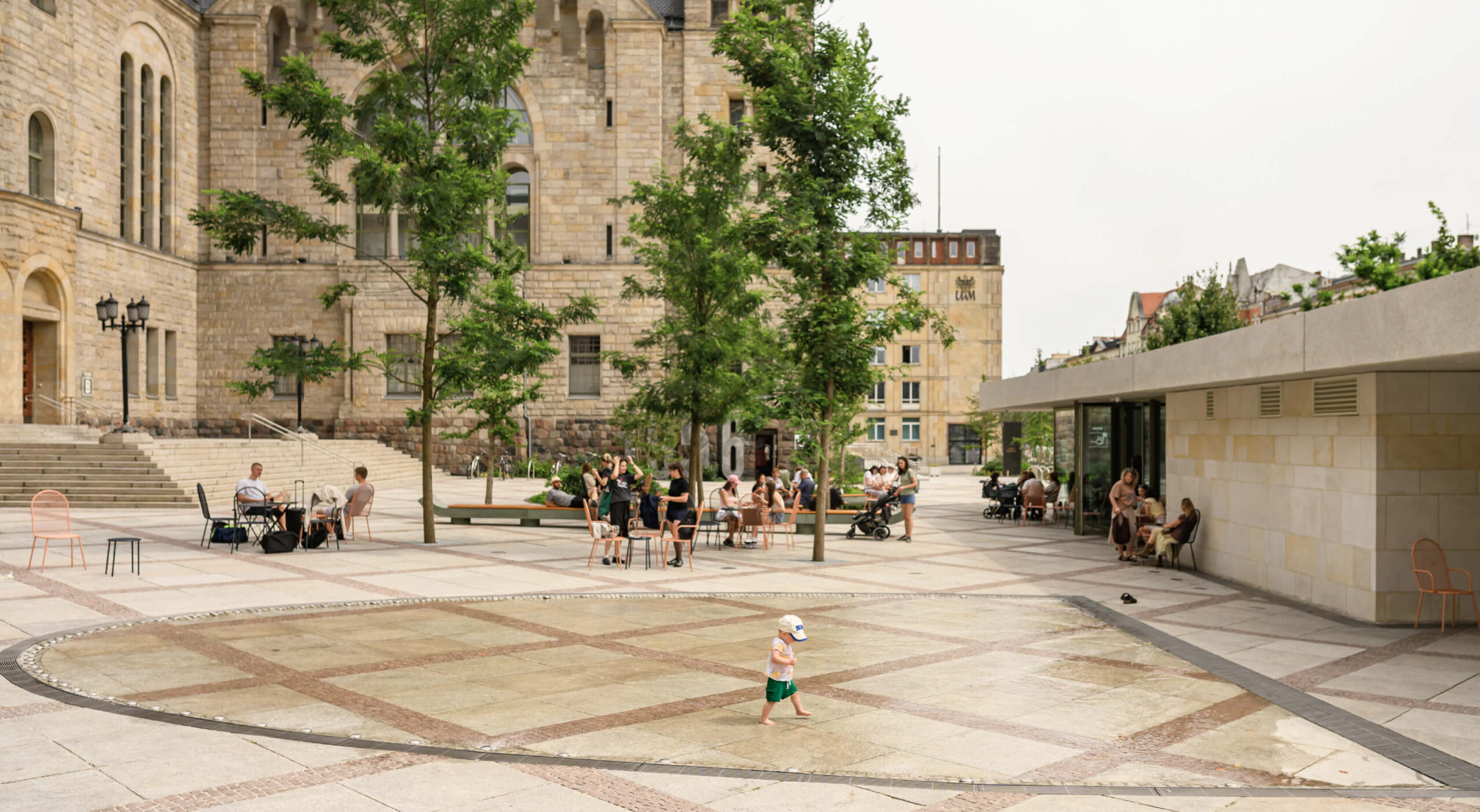
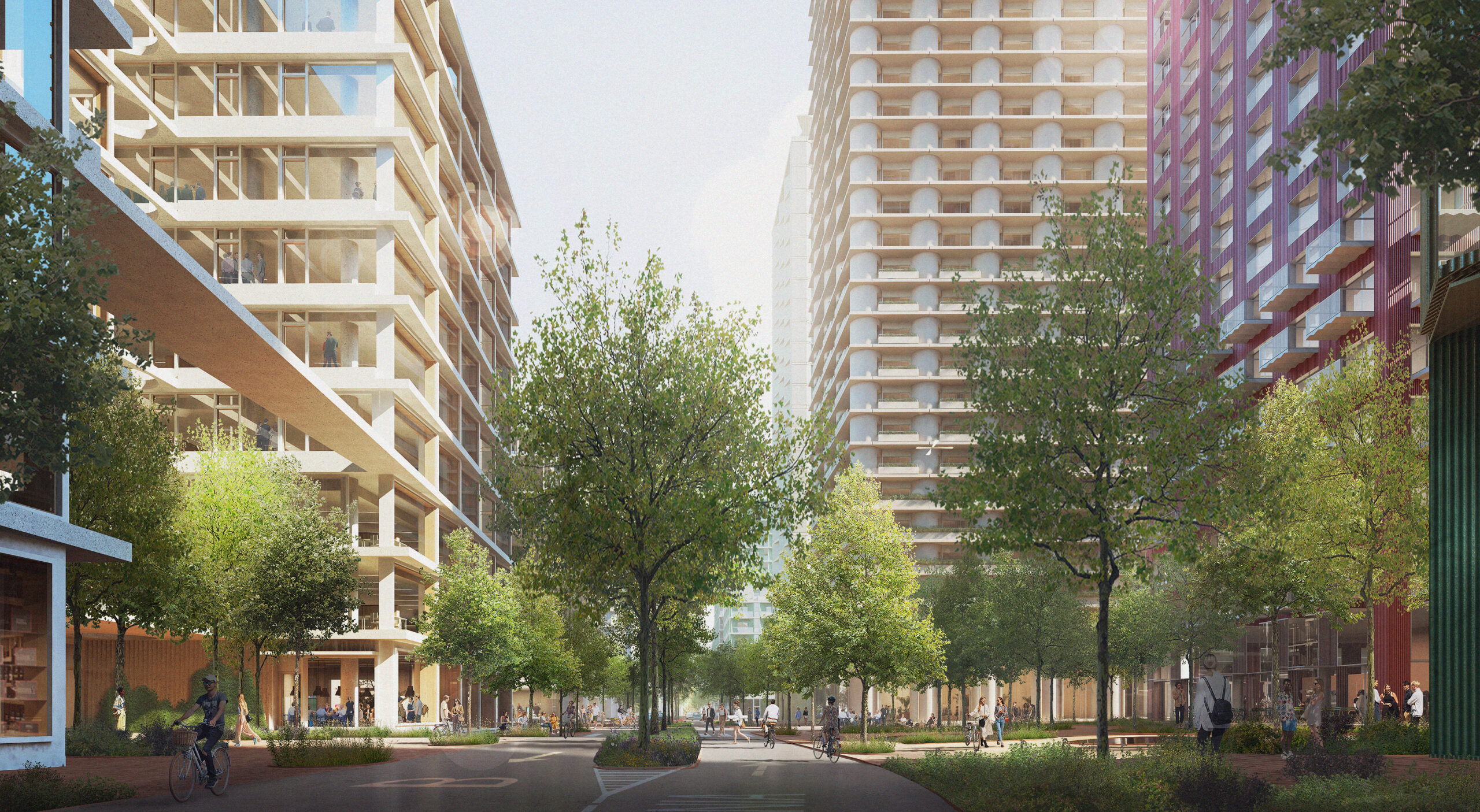
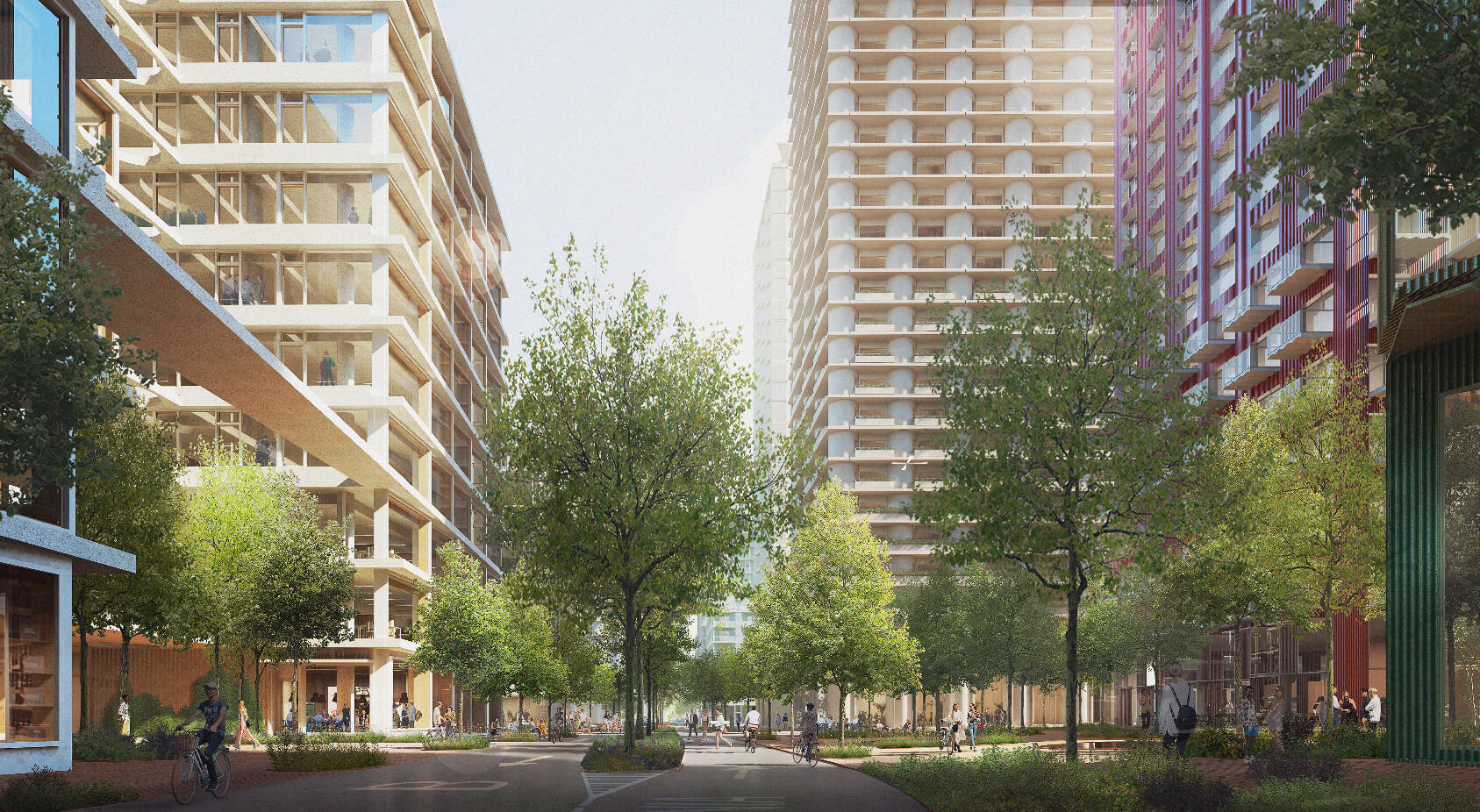
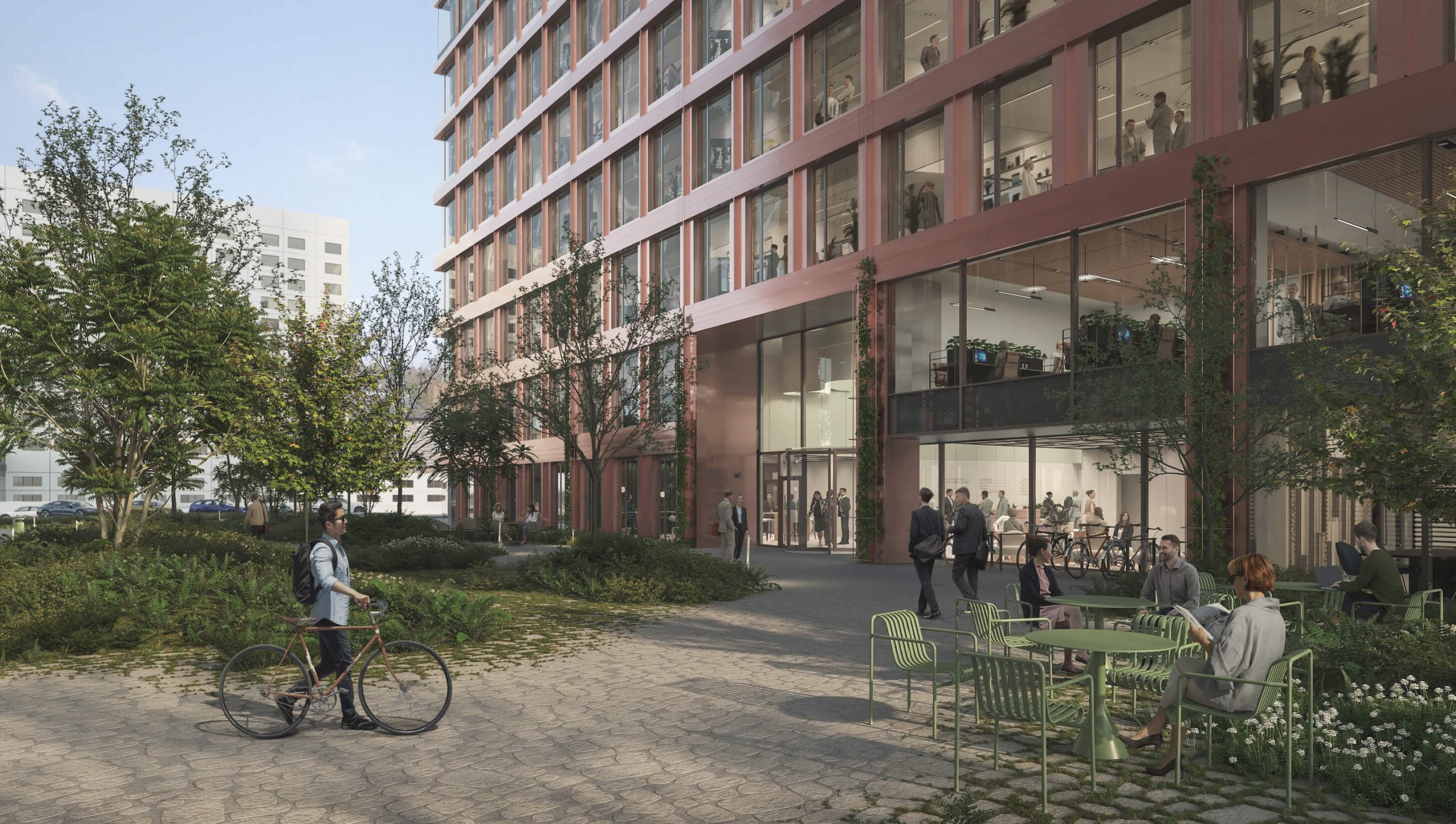
This office building and its surroundings form a cohesive part of the architectural and landscape composition of Towarowa 22 in the Warsaw Business District and were the first elements to be constructed and opened to the public in 2025.
Building B, Towarowa 22
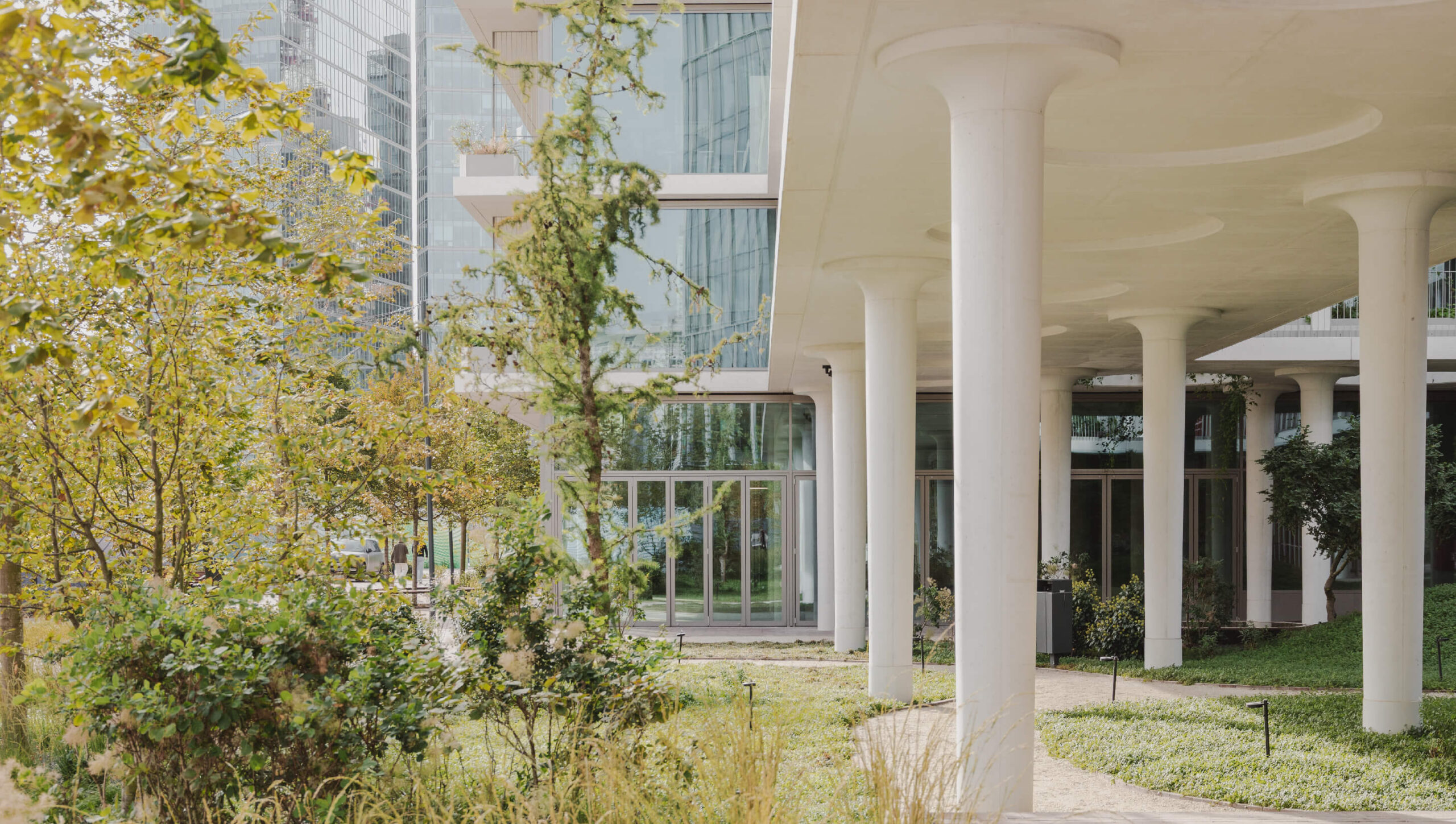
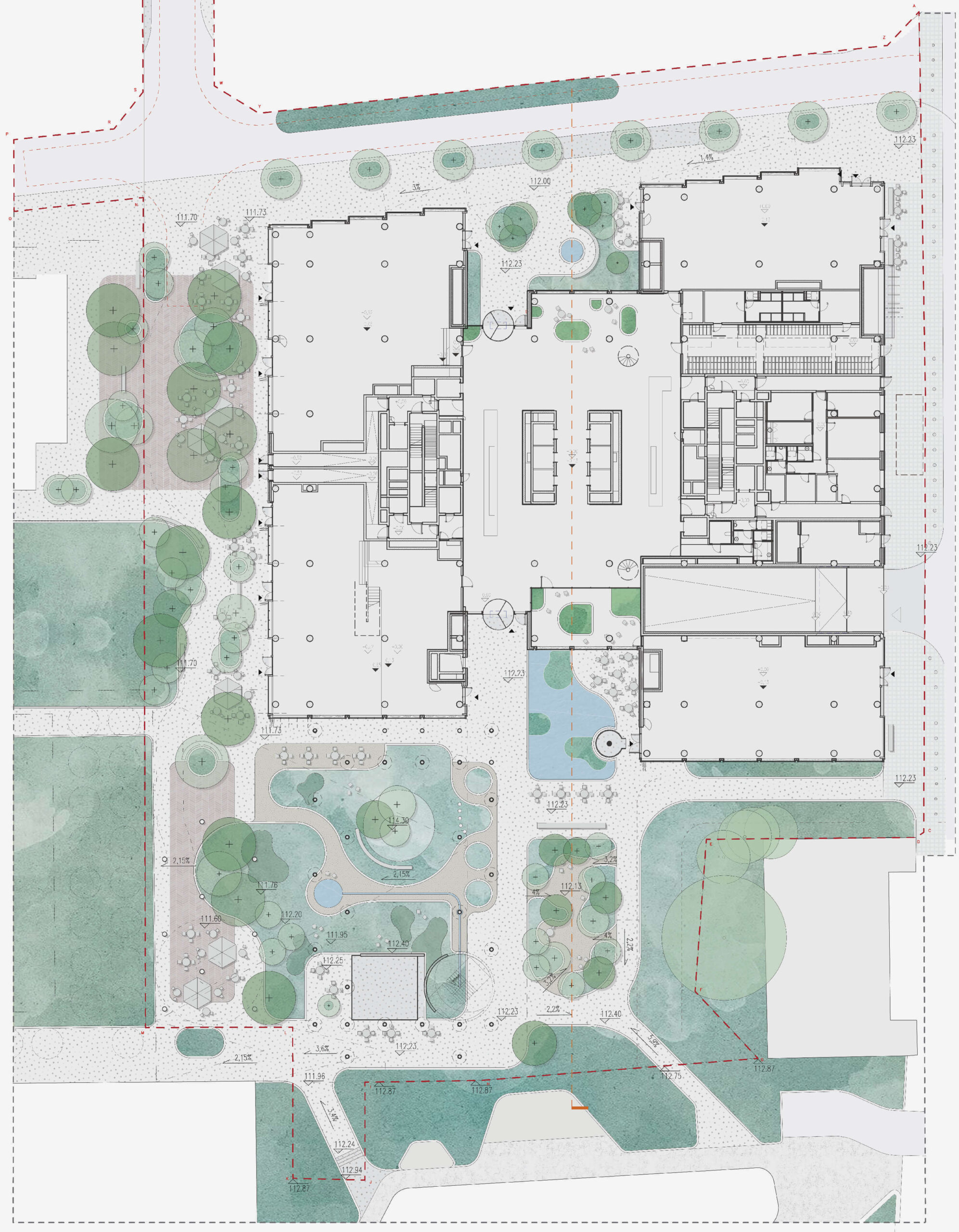
The architectural and public-realm gestures anchor the design of this block within the broader urban decisions defined at the masterplan scale. On the Daszyńskiego Roundabout side, the building sits along a green axis that runs from the passageway in Building A, across Wronia Street, and toward the newly designed pergola. The pergola’s green structure, in turn, “stitches together” the northern square with the park planned inside the renovated hall.
AUTHORS
Kamila Lejman-Kudła, Paulina Kalska, Sonja Marczewski, Emilia Piłat, Marta Przygoda, Oliwia Rybczyńska, Jadwiga Ryczek, Lucyna Rydel, Marta Tomasiak
Partners & Collaborators
JEMS architekci (lead architect)
area
1 ha
client
Echo Investment, AFI
year
2022-2025
photographs
Marysia Kot courtesy of JEMS architekci
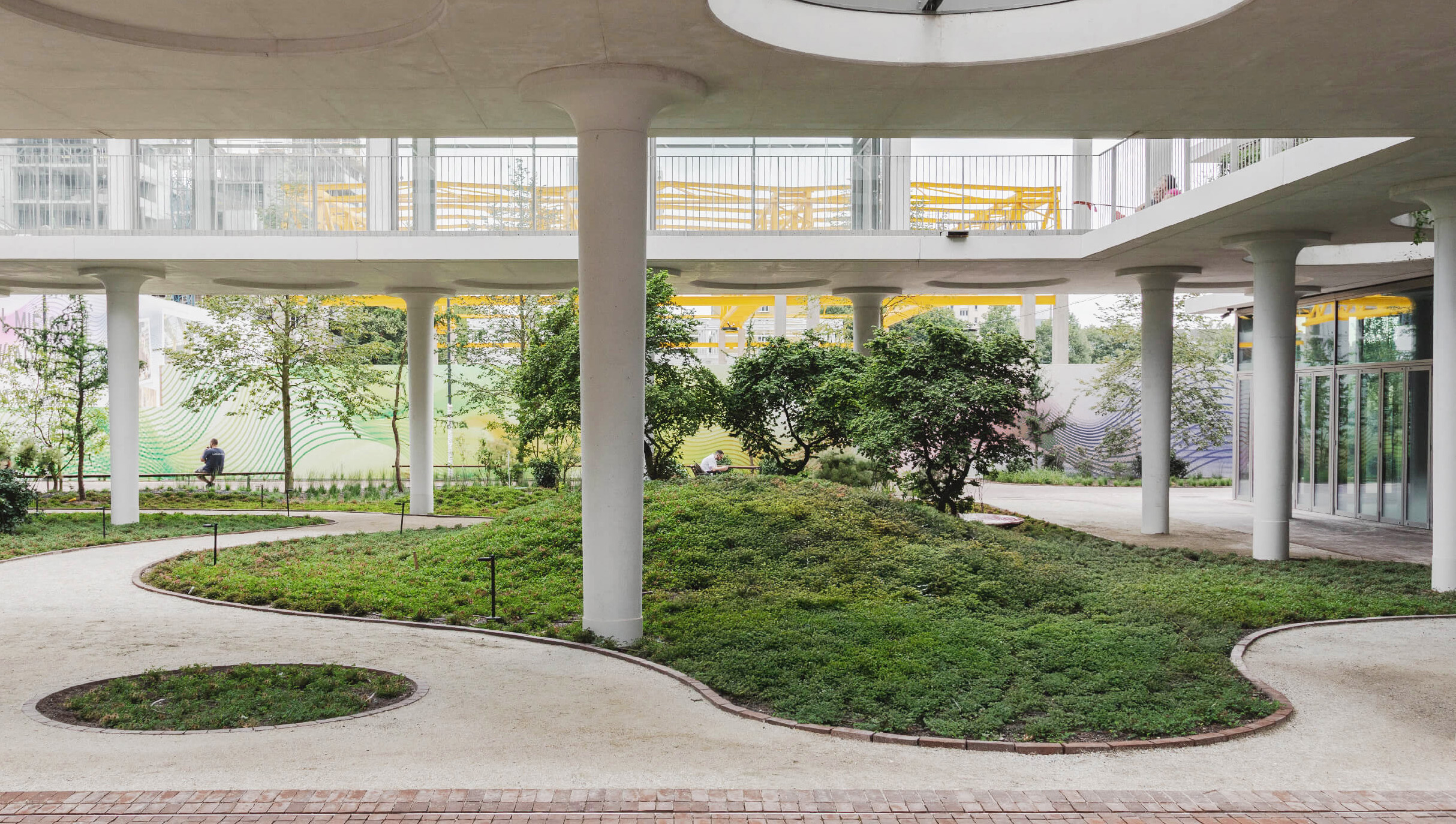
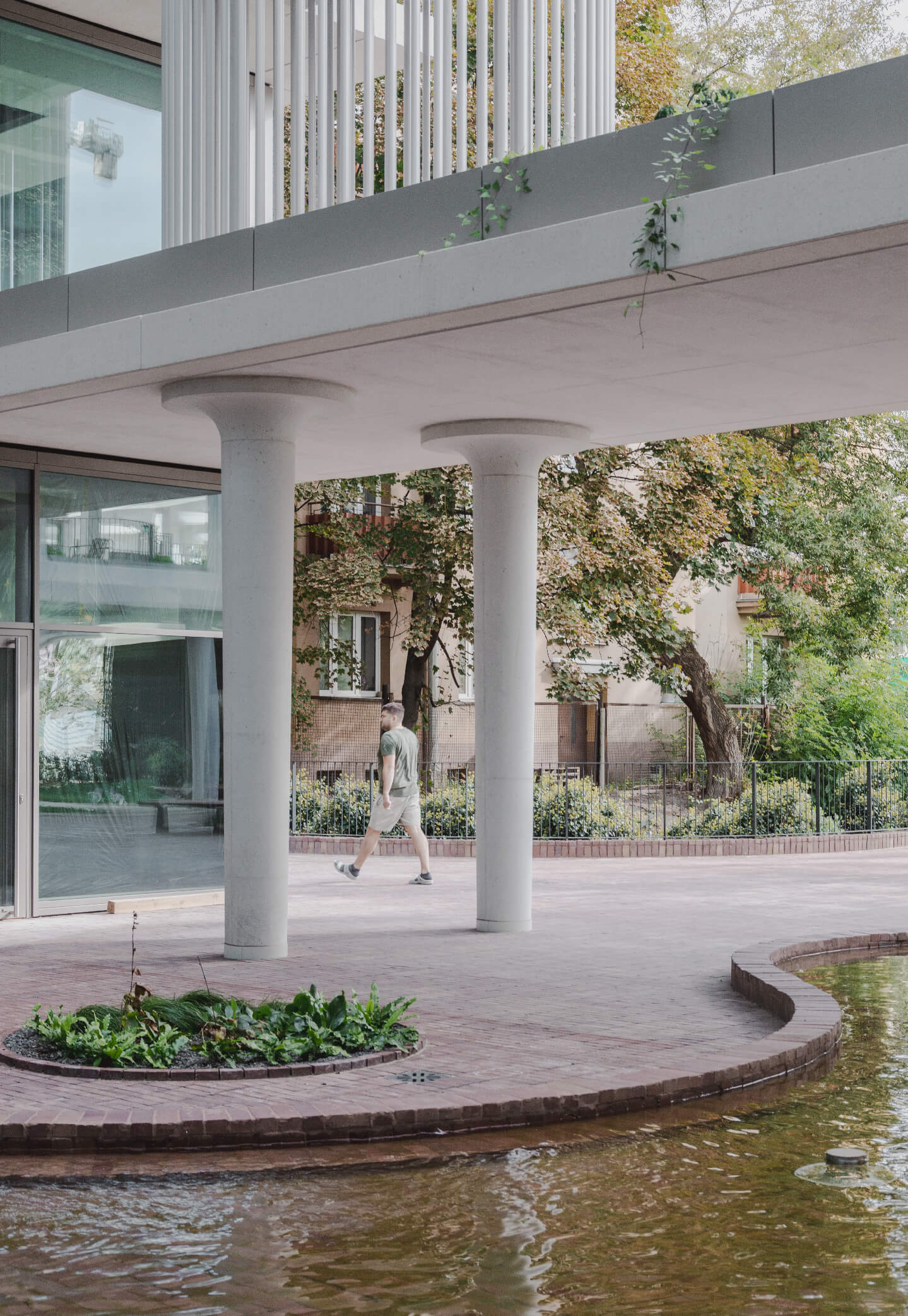
Within the block, the layout of exterior spaces is shaped in direct relation to the building’s architecture. The designed landscape permeates the building structure – both as a continuation of the existing sequence of openings and enclosures within the volume, and as a system of multi-level green interventions climbing up the higher floors. The outdoor green “rooms” are formed much like architectural interiors – defined by a floor (paving), walls (building façades or planted edges), and a ceiling created by tree canopies or suspended lighting.
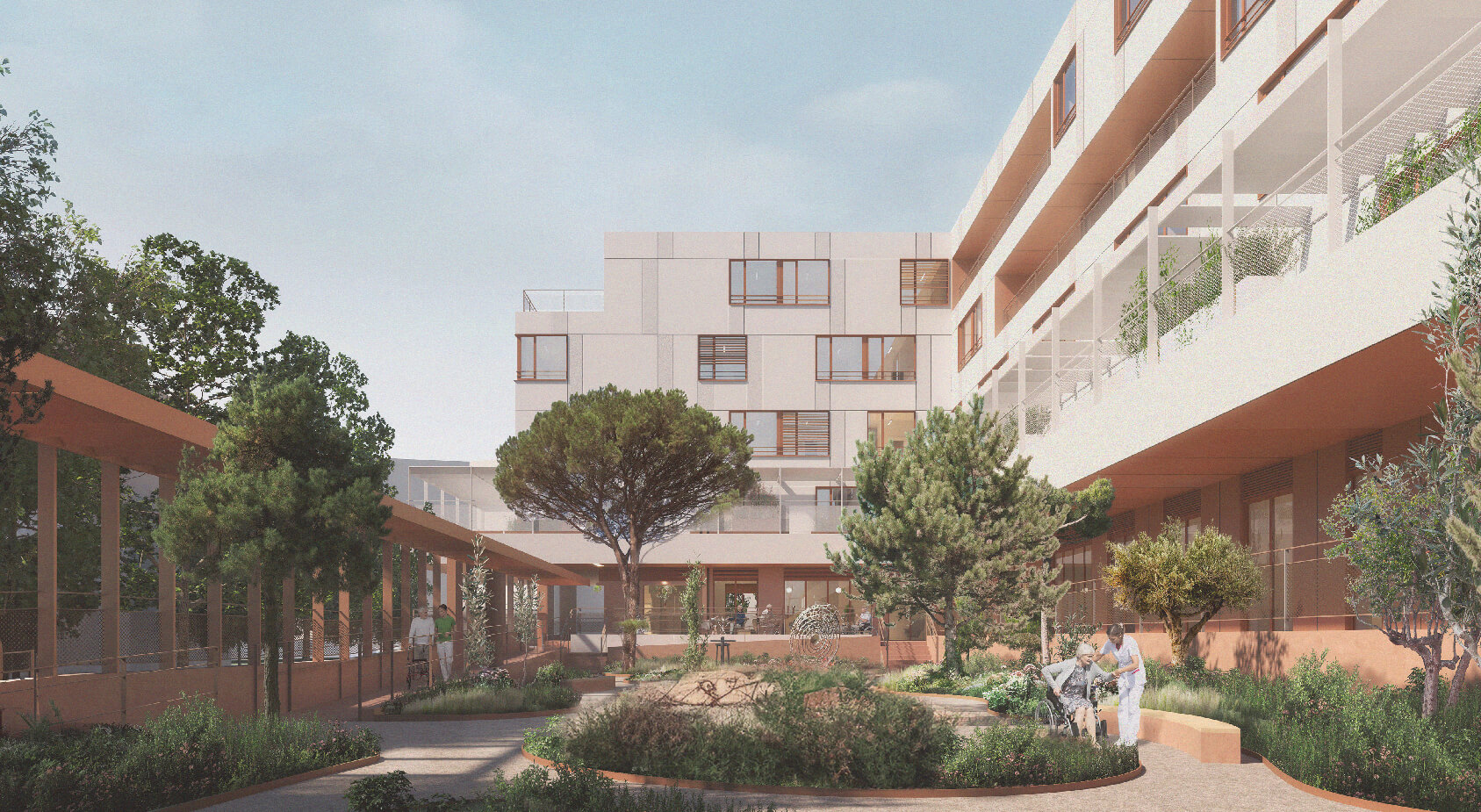
The project proposes a gradation of exterior spaces: the semi-courtyard facing Wronia Street and the passage between Building B and Block D act as green pockets connected to the public street. Deeper into the site – under the new pergola, within the northeast pocket park, or alongside the indoor park housed in the former printing hall – the character of the landscape transforms, becoming increasingly wild and natural.
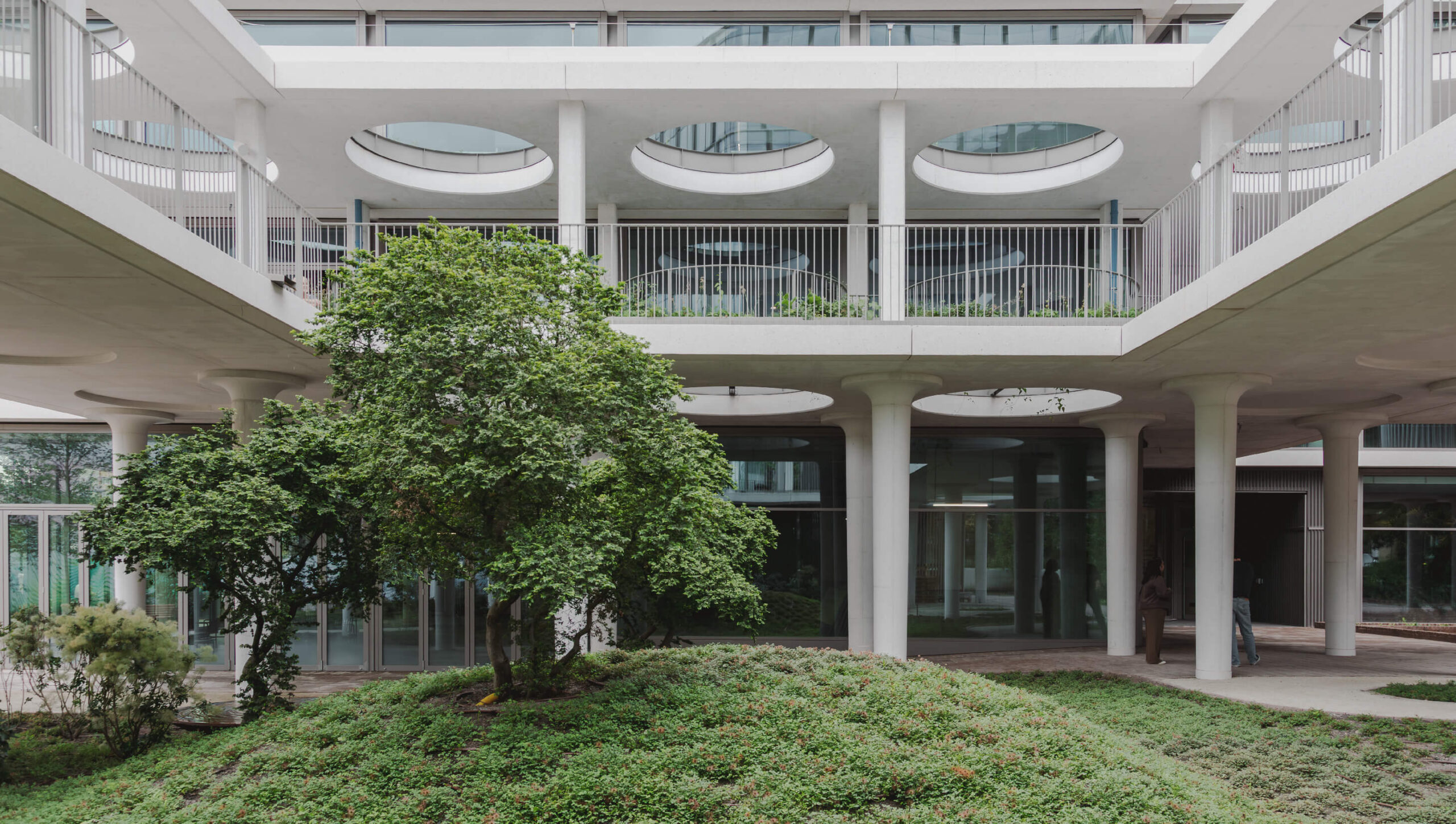
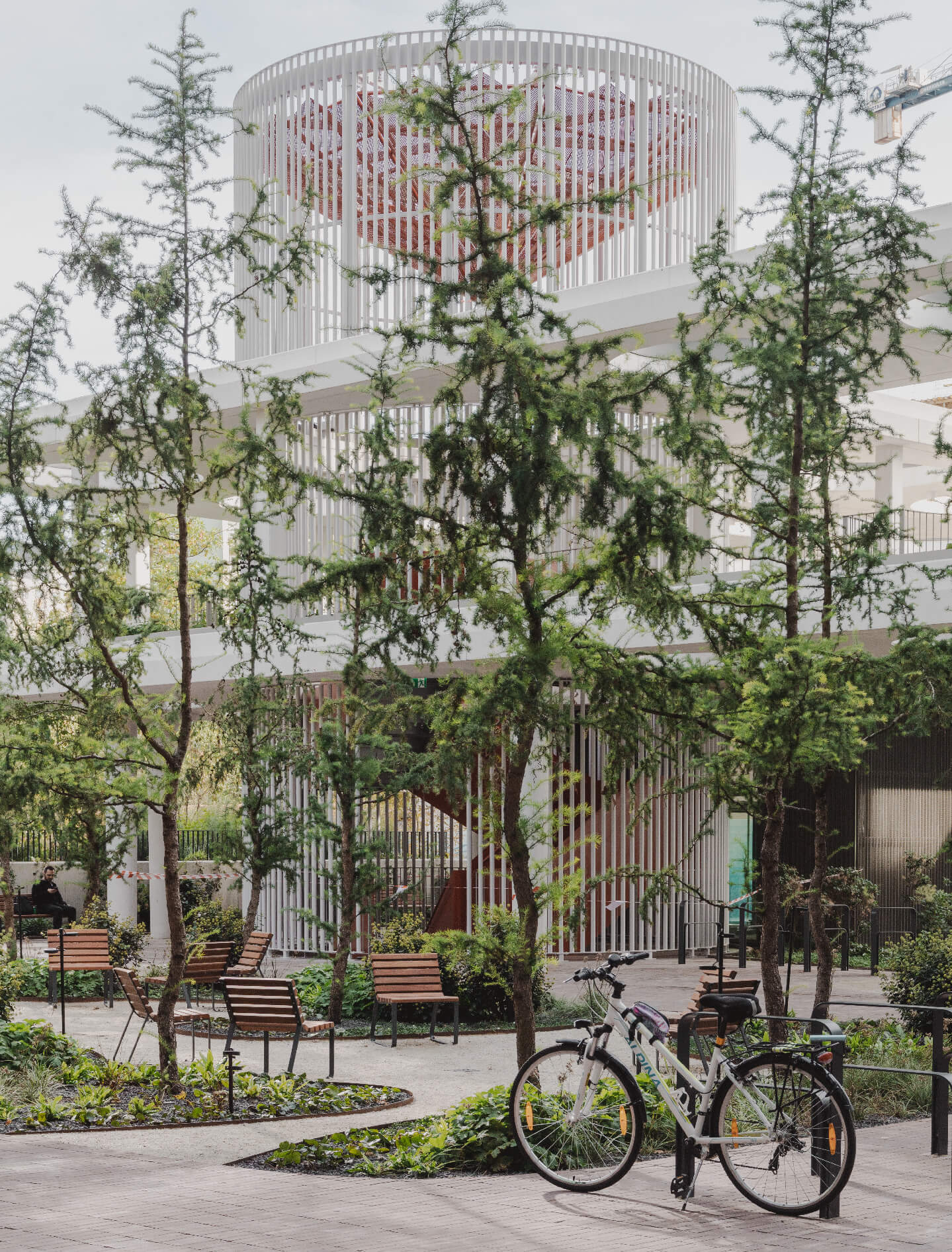
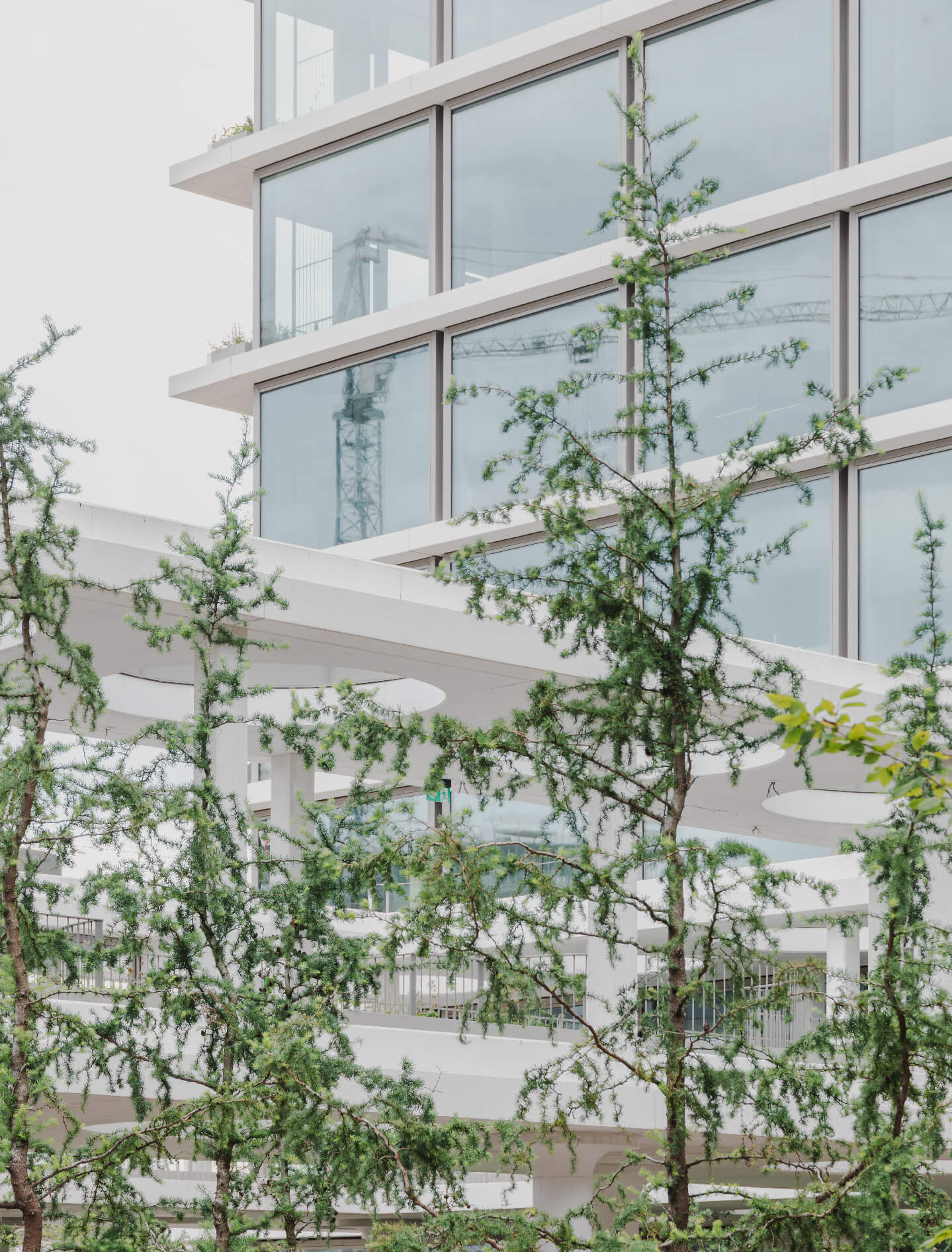
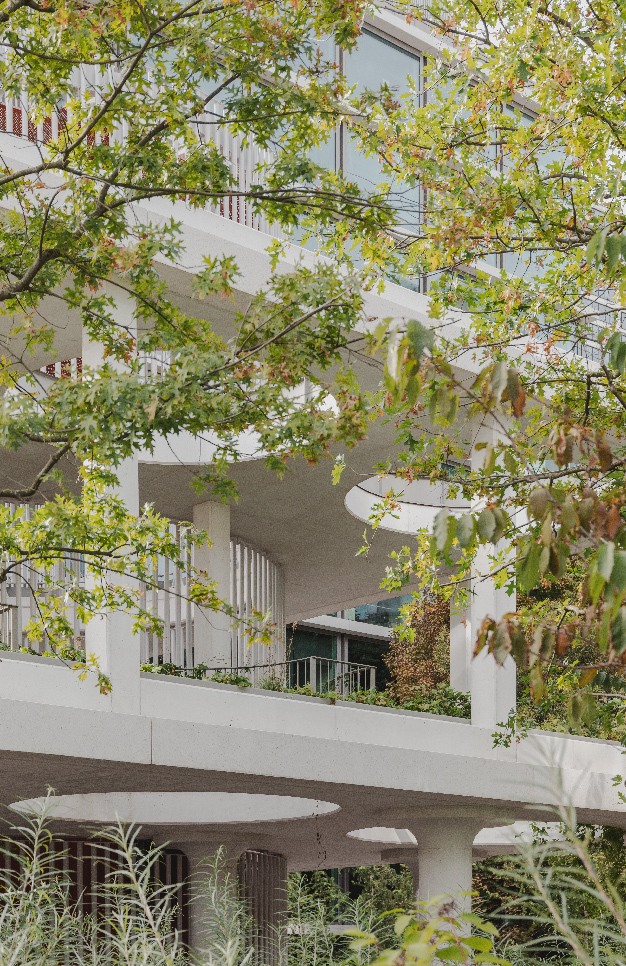
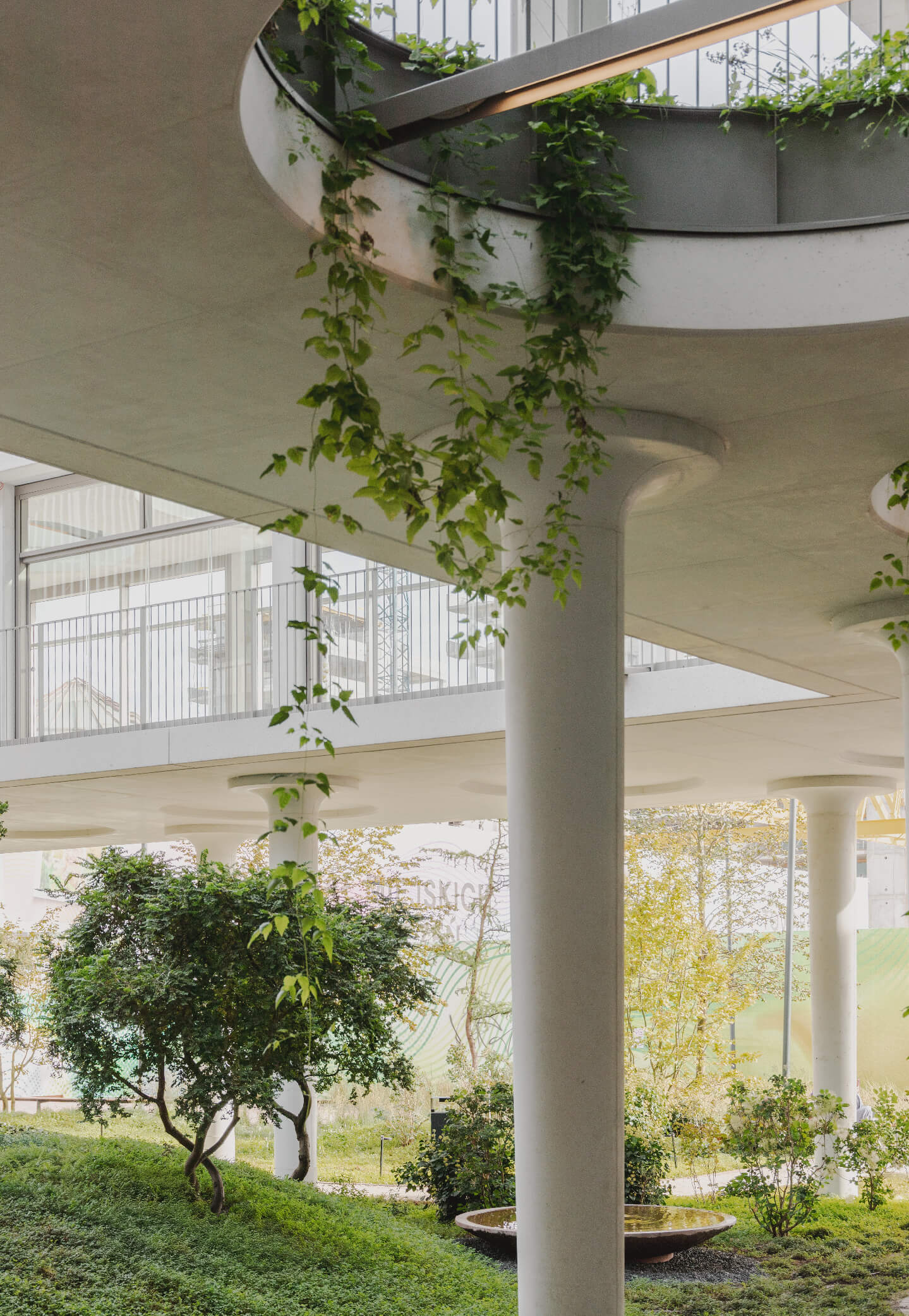
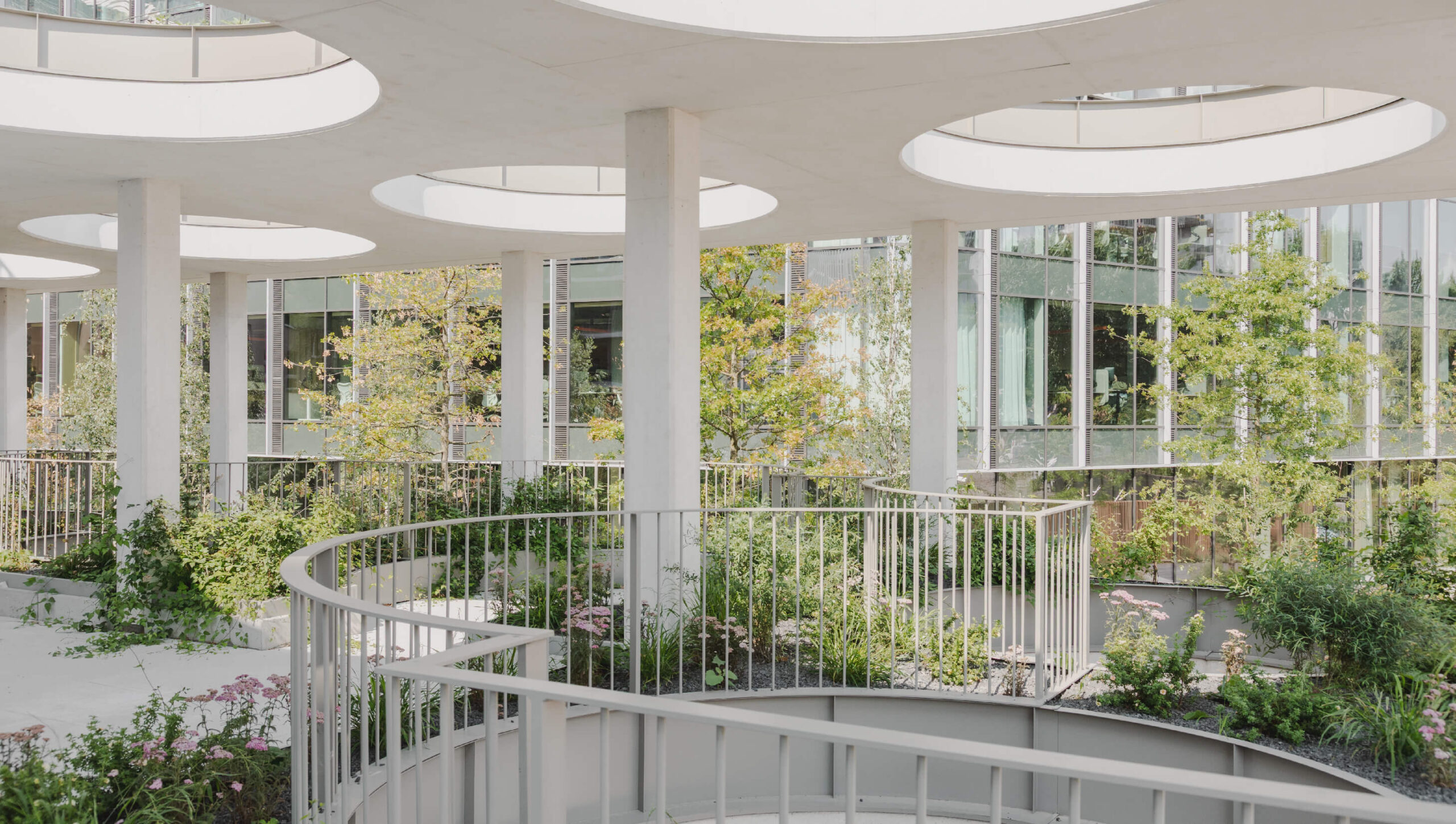
A key aspect of the project is the treatment of greenery in its third dimension and its integration with the building structure. In this sense, the proposal creates a new typology of a building eco-system – a workplace that, through green roofs, planted façades, and vegetation-covered walkways, naturally ventilates, cools, and shades itself, forming a comfortable and inviting environment for daily use.
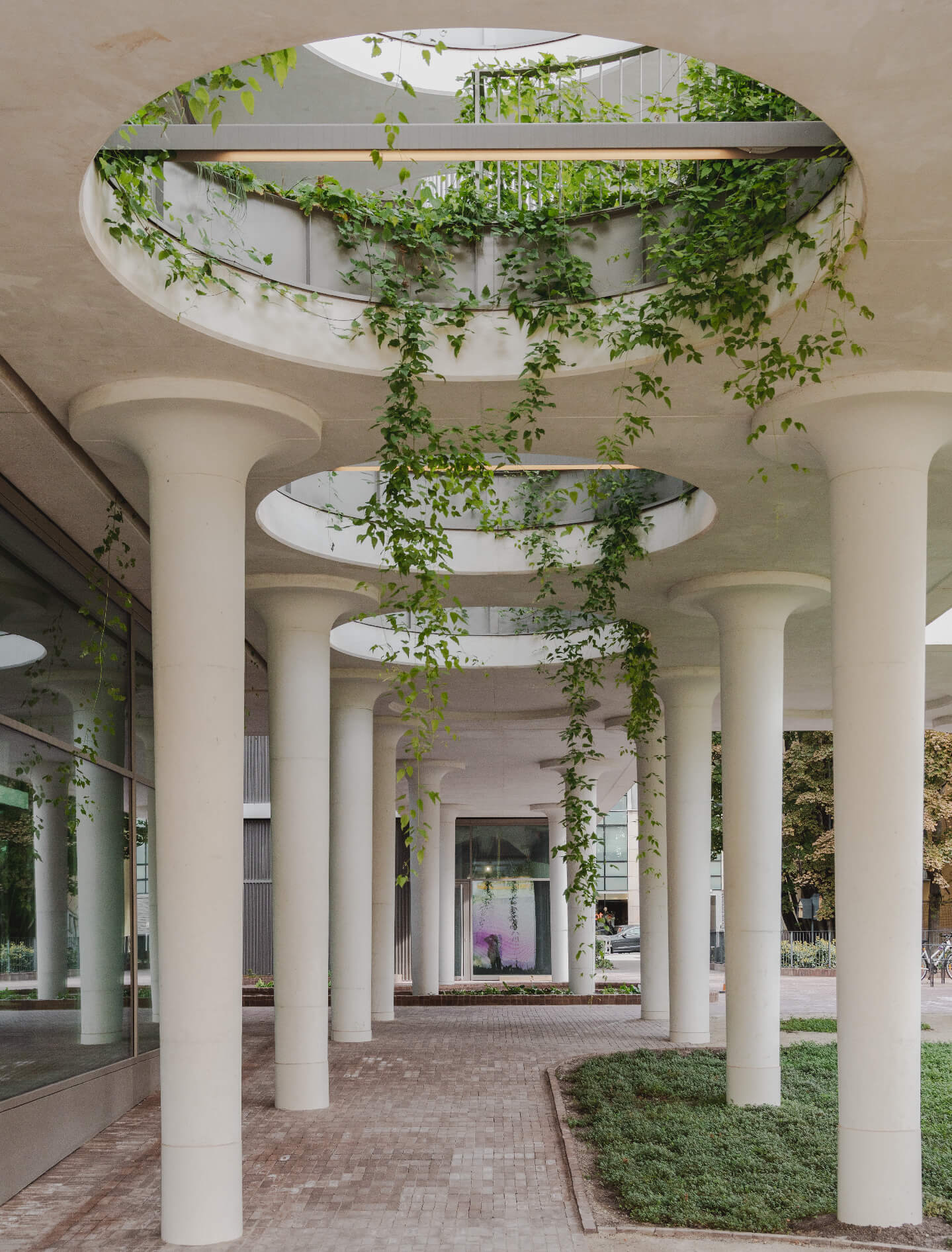
Cascading greenery and circular openings filter light and shadow
Other projects